Le Tremblet old port (Vieux Port du Tremblet) lies in the commune of Saint-Philippe, at the foot of the Grand Brûlé, on the east coast of Reunion Island's Wild South. People come here for its black sand beach, formed by the lava flow of April 2007: a very young shoreline, and it is not every day you get to visit a beach whose birth date you know.
Tremblet beach: black sand and olivine glints
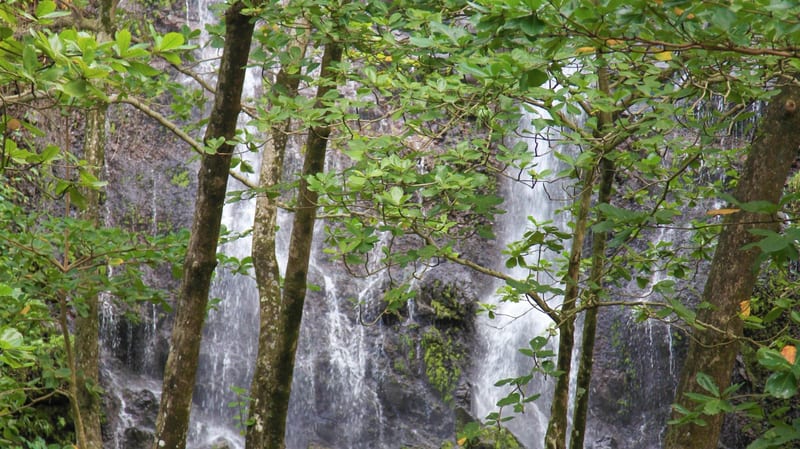
The first surprise is the golden-green shimmer of the sand. It comes from countless olivine crystals, a mineral brought by the lava, which sparkle in the sun among the black grains. The old port is backed by a cliff covered in lush green vegetation, a striking contrast with the dark beach and the blue of the Indian Ocean. After heavy rain, short-lived waterfalls pour from the top of the cliff straight onto the sand – a sight you only get on certain days.
A beach born from the April 2007 lava flow
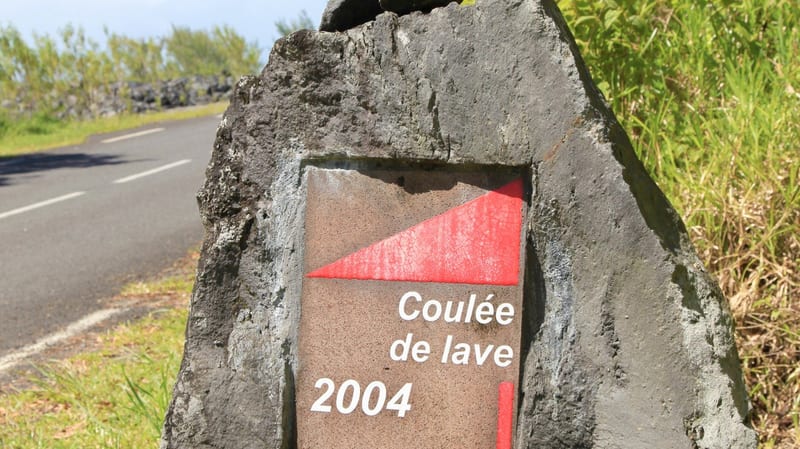
In April 2007, a lava flow from the Piton de la Fournaise reached the coast at Le Tremblet, below the Grand Brûlé, and gave birth to this beach. Along the RN2 road, which crosses the Grand Brûlé, signs give the dates of the successive lava flows, so you can read the volcano's recent history as you drive. The volcano massif belongs to the Réunion National Park, whose "Pitons, cirques and remparts" have been a UNESCO World Heritage Site since 2010.
Getting to Le Tremblet from La Plantation
From La Plantation in Saint-Joseph, follow the coast road east towards Saint-Philippe. Le Tremblet sits in the commune of Saint-Philippe, at the foot of the Grand Brûlé, along the RN2, which then continues to Sainte-Rose as the Route des Laves (lava road). For access to the beach and the day's conditions, just ask Aurélie and Eric: they know the area well.
Our tips and what to combine it with
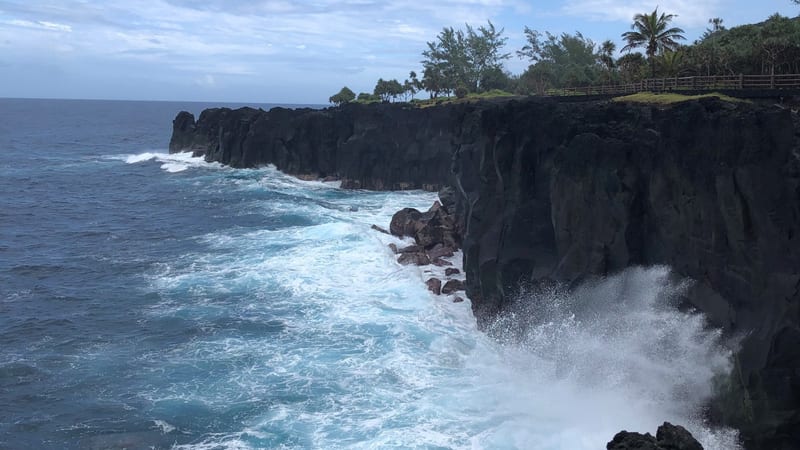
The old port is a place for a stroll and for taking in the view: as everywhere on the wild coast, swimming in the sea is not an option here. Come instead to photograph the beach, admire the cliff and, after heavy rain, its waterfalls. To round off a day on the east coast:
- the lava tunnels of the Grand Brûlé, explored with a guide;
- the black basalt cliffs and screw-pine (vacoa) forest of Cap Méchant, with its picnic area;
- further on towards Sainte-Rose, the coconut grove of Anse des Cascades.
For more ideas, see our guide to what to see and do in the Wild South.
Fancy exploring the east coast at your own pace? Settle into one of our rooms with a private terrace and ask Aurélie and Eric to help you plan your day.